Restored Yard
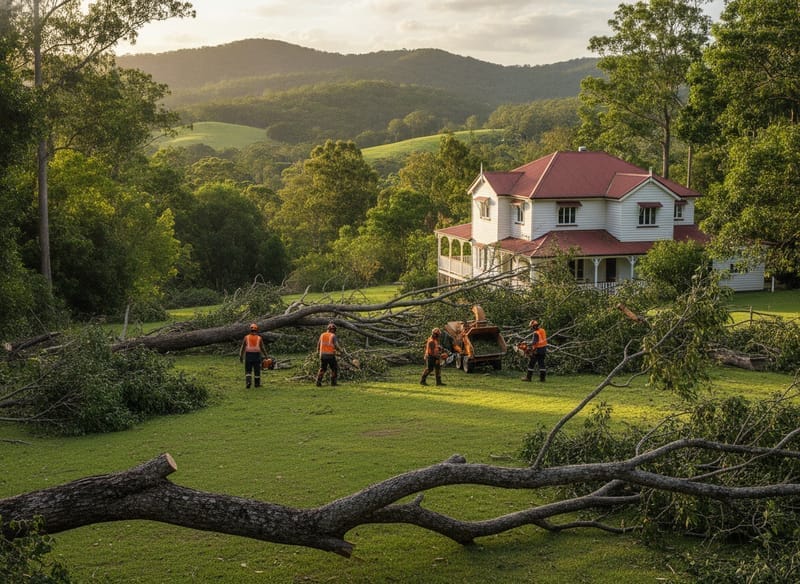
We remove the mess quickly, turning fallen timber into mulch.
Fast, comprehensive cleanup of fallen limbs and uprooted trees after severe weather.
Cleaning up properties across Allambie Heights and The Forest.
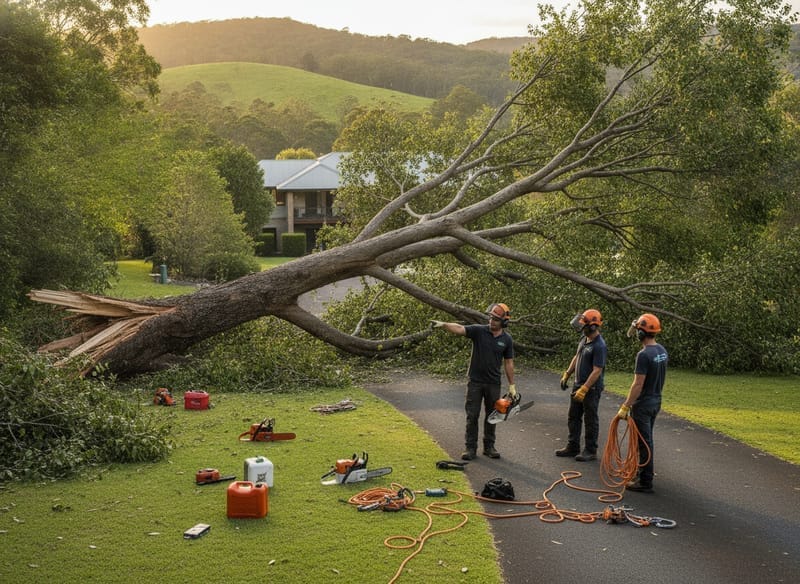
When high winds tear through the canopy, our Storm Damage Tree Removal Allambie Heights service handles the mess.
Summer downbursts and winter gales regularly batter the exposed ridges of Allambie Heights, causing heavy limb drop on large eucalypts. We clean up the debris so your property is safe and usable again.
We remove the mess quickly, turning fallen timber into mulch.
We identify and remove 'widow-makers' (broken branches stuck in the canopy) before they fall.
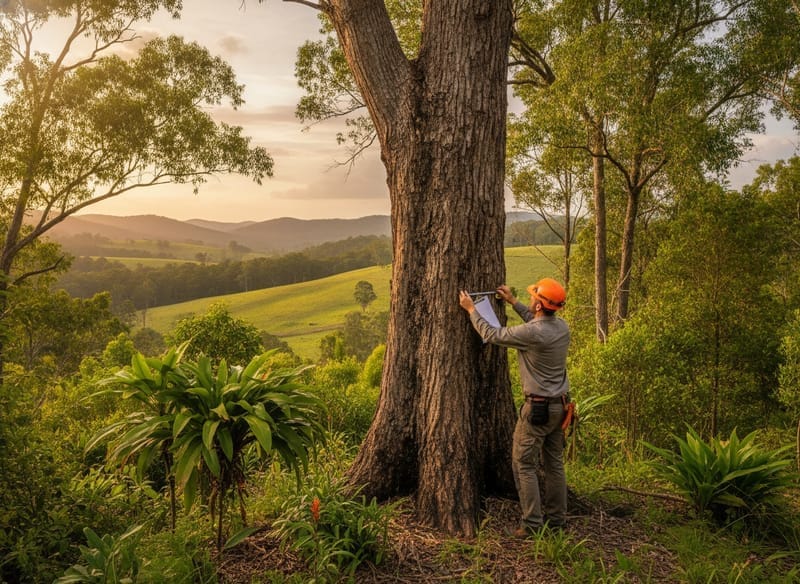
We assess the extent of the storm damage.
We provide a fixed quote for the cleanup.
Our crew processes the fallen timber using chainsaws and chippers.
When severe thunderstorms or east coast lows hit the Hawkesbury Sandstone plateau, the combination of high winds, saturating rain, and shallow soil often leads to catastrophic tree failure. For urgent, safe, and professional Storm Damage Tree Removal Allambie Heights, homeowners, acreage owners, and property managers rely on our experienced team at The Forest Arborist. We understand that a fallen Sydney red gum or a heavily damaged blackbutt across your driveway, roof, or fence is a highly stressful emergency that requires immediate, decisive action. Our local crews are on standby to secure your property. The Forest is uniquely characterised by its beautiful but massive native canopy, intertwined with 1960s and 70s properties, steep battleaxe blocks, and narrow access roads extending out towards Belrose and Frenchs Forest. When an east coast low dumps saturating rain and rips through these gullies, entire root plates can lift, bringing down tonnes of timber. We are the arborists who live and work here, equipped with the specialised rigging gear, top-handle chainsaws, and heavy-duty chippers required to clear large-scale storm debris safely and efficiently, getting your property back to normal as quickly as possible.
After a severe weather event, it is tempting to fire up a residential chainsaw and start clearing branches. However, storm-damaged trees behave unpredictably. Fallen trunks and hung-up limbs are loaded with massive kinetic energy, trapped in complex tension and compression wood. A single incorrect cut can cause a branch to 'barber chair', violently split, or spring upward, leading to severe injury and significant property damage.
Furthermore, unqualified 'storm chasers' or cheap loppers often cause more harm than the storm itself. They may indiscriminately top or lop damaged but saveable trees. This violates AS4373 pruning standards and triggers a flush of weak, epicormic regrowth that quickly becomes the next storm hazard. Unqualified operators also frequently lack the necessary insurance or the ability to produce formal, itemised documentation required by your insurance provider.
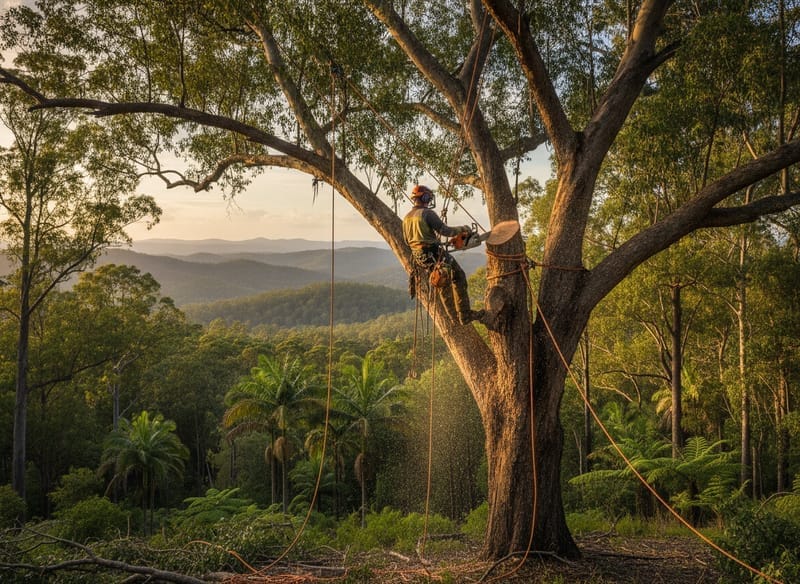
At The Forest Arborist, our AQF Level 3 climbing arborists approach storm damage with a heavily calculated strategy. We carefully assess tension points, utilise advanced rope access or elevating work platforms (EWPs), and dismantle the wreckage piece by piece. If the storm has damaged your property, we also provide the precise photographic evidence, detailed quotes, and arborist reports required by your insurer, ensuring your claim proceeds smoothly while your home is safely cleared.
Clearing fallen or shattered timber in the steep, vegetated terrain of The Forest requires highly specialised techniques. We deploy advanced arboriculture methods to systematically dismantle hazards without causing secondary damage to your home or landscape.
We secure the site first. Our arborists assess immediate hazards, such as limbs hung up over roofs or power lines, and safely lower them using friction devices. We temporarily stabilise compromised root plates and clear critical access pathways for emergency vehicles.
For standing trees that have sustained fatal structural damage, we utilise double-rope techniques and advanced rigging. Shattered branches and heavy trunk sections are securely tied off and slowly lowered to the ground to protect underlying structures, native gardens, and retaining walls.
When dealing with uprooted blackbutts or turpentines on the steep battleaxe blocks common in Allambie Heights, we use mechanical winches and skid steers. This allows us to extract heavy logs up steep driveways where traditional elevating work platforms cannot manoeuvre.
Once the tree is safely on the ground, our crews use high-capacity wood chippers (up to 12-inch) to process all branches into mulch on-site. Heavy timber is cross-cut using large ground saws, like the MS500i, and removed via our tipper trucks.
From the moment you contact our team in a crisis, we follow a strict, systematic process designed to eliminate risks, secure your property, and facilitate your insurance claims with zero hassle. - Rapid Deployment and Site Assessment: We prioritise emergency call-outs across The Forest. Upon arrival, our AQF Level 3 arborists conduct a hazard walk-through, identifying live power lines, hung-up limbs, and structural risks on the property. - Documentation for Insurance: Before a single cut is made, we take comprehensive photographs of the damage. We generate a detailed, itemised quote outlining the exact scope of works, which you can submit directly to your home insurer to expedite your claim. - Make-Safe Execution: Our first physical step is neutralising the immediate threat. This may involve winching a fallen trunk off a roofline or utilising rope access to carefully lower shattered canopy sections dangling over high-traffic driveways. - Complete Removal and Cleanup: Once the site is stabilised, we proceed with the full dismantling and extraction. We chip the smaller debris, cross-cut the heavy logs into manageable lengths, and haul everything away, leaving your site safe and debris-free. - Final Arborist Review: Before leaving, we inspect any adjacent trees that may have been struck or destabilised during the storm, advising you on whether a formal AQF Level 5 arborist report is required for future safety.
Emergency tree work carries immense liability, which is why strict compliance and safety are non-negotiable for our team. We are fully insured with comprehensive Public Liability and WorkCover insurance, protecting you entirely while we operate on your property.
Every remedial cut we make aligns strictly with AS4373 (Pruning of Amenity Trees). If a storm-damaged tree can be saved through corrective pruning, we will perform precise target pruning to restore its structural integrity. For trees that must be completely dismantled, all work is carried out by ticketed AQF Level 3 climbing arborists holding the required qualifications for working at heights, complex tree felling, and traffic management.
Managing Storm Damage Tree Removal Allambie Heights requires a deep understanding of local council regulations. Under the Warringah Development Control Plan 2011 (clause E1), you generally need a permit to remove any tree over 5 metres tall or to prune more than 10 per cent of its canopy.
However, when a severe east coast low strikes, safety takes precedence. If a tree poses an imminent danger or is classified as high risk due to storm damage, it can often be removed without prior council consent—provided an AQF Level 5 arborist confirms the hazard in writing and a copy is supplied to the Northern Beaches Council.
Our team handles this local bureaucracy for you. We know the specific challenges of the Hawkesbury Sandstone terrain, where shallow soils over rock shelves leave massive native species highly susceptible to uprooting during saturating rains. We ensure all emergency works comply with local overlays, including bushfire-prone land requirements, keeping you fully compliant.
Once the emergency cleanup is complete, your remaining trees require careful monitoring. High winds can cause hidden micro-fractures in large branches that may not fail until weeks after the storm has passed. We highly recommend scheduling a comprehensive tree risk assessment by an AQF Level 5 consulting arborist to evaluate the structural health of your remaining canopy. Keep an eye out for newly leaning trunks, soil heaving at the base, or large hanging deadwood. If you notice any of these signs, contact us. Preventative maintenance, including selective crown thinning and deadwooding, is your best defence against the next severe weather event.
Pricing for Storm Damage Tree Removal Allambie Heights depends on the volume of debris.
We offer free, no-obligation quotes to get your cleanup started.
Storm cleanup available in:
Contact us today for fast and thorough storm damage tree removal.
Get a Free Quote