Restored Access
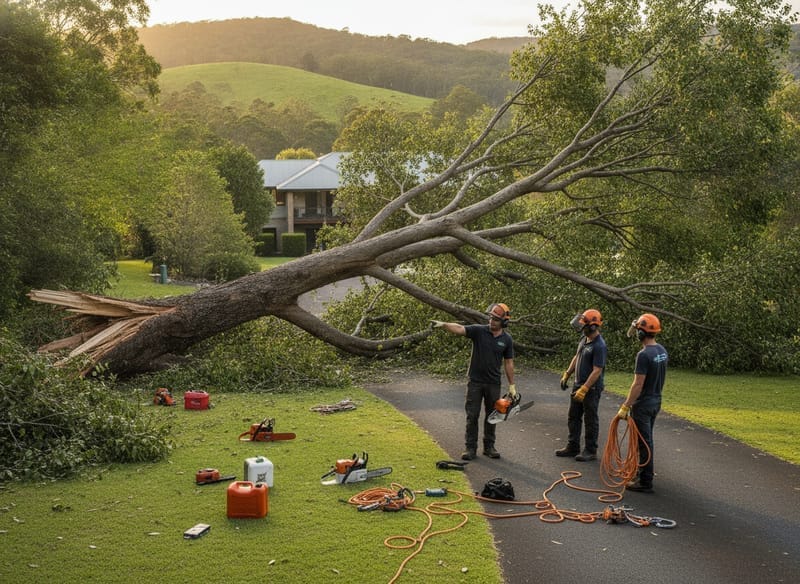
Clear blocked driveways and paths so you can get back to normal life.
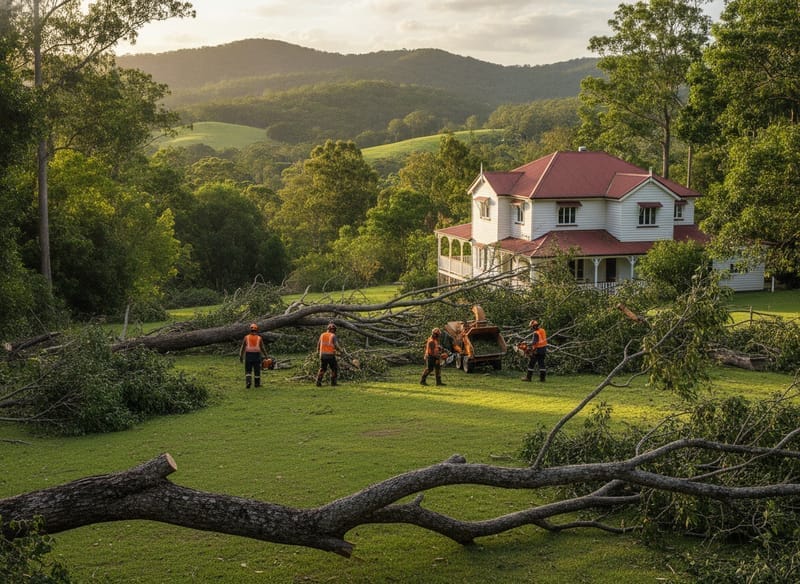
Comprehensive cleanup of fallen trees, snapped branches, and hazardous storm debris.
Serving the storm-prone plateau of Belrose and surrounding suburbs.
For comprehensive storm damage tree removal Belrose properties count on, our team provides an all-in-one cleanup solution. We clear the wreckage and ensure the surviving trees are structurally sound.
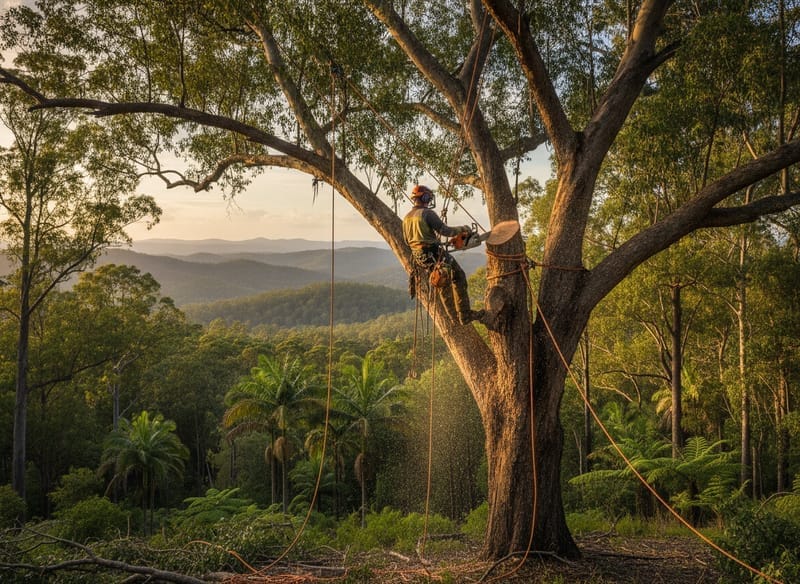
Belrose experiences intense downbursts during summer storms. These winds frequently snap the heavy upper canopies of mature eucalypts, requiring our specialized high-climbing retrieval skills.
Clear blocked driveways and paths so you can get back to normal life.
Removing broken branches before they fall on a calm day weeks later.
All mess chipped and swept, leaving your property immaculate.
We assess the scattered damage and prioritize hazards hanging above head height.
Climbers ascend to safely bring down cracked or suspended limbs.
Fallen trunks are bucked into manageable logs, and branches are fed into our chippers.
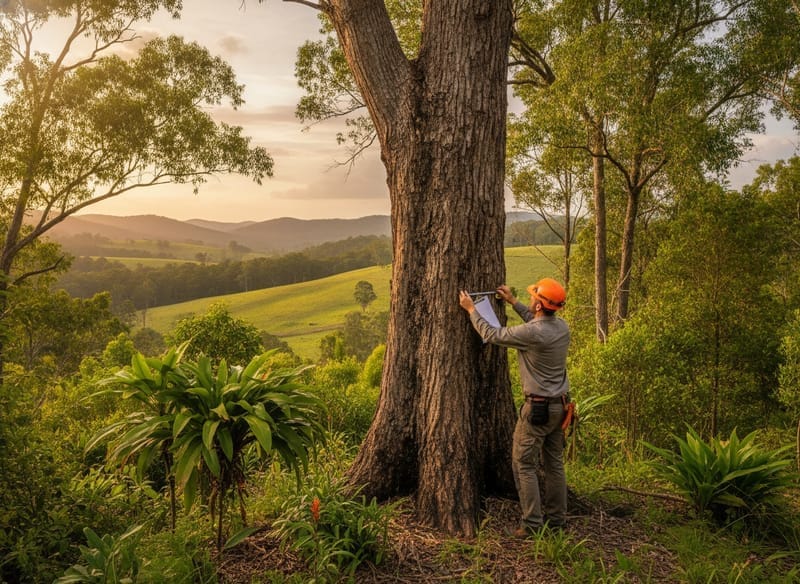
We ensure no structural threats remain in the canopy above.
Belrose is nestled on a spectacular sandstone plateau right up against the sprawling bushland of Garigal National Park. While this setting offers an incredible lifestyle, our coastal Sydney climate brings fierce east coast lows and severe summer thunderstorms, often resulting in snapped canopies, hung-up branches, and uprooted trees across the suburb. When violent winds and saturated soils bring a massive blackbutt or Sydney red gum crashing down on your roof, driveway, or boundary fence, you need immediate, professional intervention. Our team provides dedicated Storm Damage Tree Removal Belrose services to secure your property safely and efficiently. Whether you have a heavy branch resting precariously over your outdoor entertaining area after a wild October downburst, or a mature tree that has completely failed on a shallow-soil ridge, our local arborists are ready to respond. We handle the hazard triage, the high-risk make-safe cutting, and the full site cleanup, ensuring your home is protected from devastating secondary damage.
Dealing with post-storm tree hazards is extremely dangerous and is absolutely never a DIY job. When a large tree fails, incredible tension becomes trapped in bent limbs, twisted trunks, and partially lifted root plates. This creates a highly volatile situation. Unqualified operators or well-meaning homeowners with a chainsaw can easily trigger a rapid release of this stored energy, leading to catastrophic injury, equipment failure, or further structural damage to your home. Hung-up branches, affectionately known in our industry as widow-makers, can silently drop at any moment during the cleanup process. Furthermore, poor hazard management often leads to the indiscriminate lopping of surviving but damaged trees. This outdated approach heavily violates AS4373 pruning standards, creating massive wounds that invite decay and prompt weak epicormic regrowth, effectively guaranteeing the tree will fail again in the next major storm. The only safe solution is professional, arborist-led intervention. We approach every snapped turpentine or uprooted scribbly gum methodically. Our climbers and ground crew understand exactly how wood behaves under extreme tension. We systematically dismantle the hazard using ropes, pulleys, and advanced rigging, ensuring any remaining canopy is managed properly. By choosing expert arborists, you protect both your immediate physical safety and the long-term health of your property's valuable tree canopy.
Securing a storm-damaged site in the steep gullies and bushland blocks of The Forest requires highly specialized equipment and precise dismantling techniques. Here is how our arborists manage complex and volatile emergency removals.
Fallen and heavily leaning trees store massive amounts of kinetic energy. We utilize specialized bore cuts, step cuts, and scarf techniques to safely release tension from twisted trunks and limbs, ensuring the saw does not bind and the heavy wood does not violently snap back at the operator.
When a storm-damaged tree is inaccessible to cherry pickers due to steep battleaxe driveways common in Belrose, our AQF Level 3 climbing arborists use advanced double-rope techniques and friction devices to safely lower broken canopy sections piece by piece.
For gigantic blackbutts or red bloodwoods that have crashed onto a roof or delicate structure, we coordinate professional crane lifts. This allows our arborists to secure and pluck heavy timber directly off your home without adding any further weight or structural stress.
Saturated seasonal soils often cause whole root-plate failures. We use heavy-duty winches and rigging lines to stabilize uprooted trees before cutting begins, preventing the massive, heavy root ball from suddenly snapping back into the ground once the trunk's weight is severed.
Navigating the immediate aftermath of a severe east coast low can be incredibly stressful for homeowners. We have refined our emergency response process to be as fast, safe, and transparent as possible. First, we conduct rapid site triage. When you call us with a tree emergency, we promptly assess the site to categorize the hazards. Immediate threats—such as a large limb resting on a roof, threatening powerlines, or blocking your only driveway—take top priority. We also identify silent hazards like hung-up branches and standing-but-compromised trees that need urgent attention. Next, our team performs vital make-safe works. We deploy our qualified climbers and rigging gear to secure dangerous limbs, clear vital access paths, and remove weight from vulnerable structures. During this phase, we take detailed pre-work photographs and provide itemized quotes that you can easily submit directly to your home insurance provider. Once the immediate danger is neutralized and the site is stabilized, we proceed with the full extraction. We systematically dismantle the remaining hazard wood, process broken branches through our large-capacity chippers, and remove the heavy logs using our tipper trucks and loaders. Finally, we completely clean the site and assess any surviving trees for hidden fractures.
Safety and compliance form the absolute foundation of our storm response work. Every emergency make-safe job is conducted by fully insured arborists holding AQF Level 3 qualifications for climbing and chainsaw operations, while our AQF Level 5 consulting arborists are available for complex risk assessments. We carry comprehensive public liability insurance and WorkCover, shielding you from any site liability. When pruning back storm-damaged canopies to save a tree, we strictly adhere to AS4373 (Pruning of Amenity Trees) to ensure we never leave ugly, decay-prone lopping stubs. If your property is currently under development, we also implement AS4970 guidelines for Tree Protection Zones so that our emergency works do not compromise your ongoing council approvals.
Belrose's unique geographic position on the Hawkesbury Sandstone plateau means our local canopy faces highly specific environmental pressures. The shallow soil over solid rock shelf makes soaring native species like Sydney red gums and turpentines highly susceptible to entire root-plate failure when April-to-August east coast lows bring gale-force winds and saturating rains.
Working in The Forest also means carefully navigating the strict regulations of the Northern Beaches Council and the Warringah DCP 2011. While emergency removal of a high-risk or imminently dangerous tree is generally permitted without standard consent, council mandates that this strictly requires written confirmation from an AQF Level 5 arborist. Furthermore, for properties backing onto Garigal National Park, bushfire overlays heavily dictate tree management. If your property falls within the 10/50 Vegetation Clearing entitlement area, certain damaged vegetation may be cleared without a formal Vegetation Clearing Permit, but having our local experts verify these exemptions is vital.
Once the immediate storm damage has been cleared from your property, ongoing vigilance is key to protecting your home. We strongly recommend walking your block after any subsequent high-wind event to inspect retained trees for newly exposed leans, fresh cracks in the trunk, or lifting soil around the root plate. If surviving trees were pruned heavily to remove shattered limbs, monitor their canopy closely over the next growing season. If you notice rapid, clustered epicormic sprouting or visible fungal brackets near the storm wounds, call our arborists back for a structural inspection. Proactive maintenance during the calmer months will drastically reduce your risk of facing another tree emergency.
Storm cleanup is priced efficiently based on the volume of debris and technical difficulty of the hazards.
Call us for a fast, on-site assessment and clear pricing to clean up your storm damage.
We assist with post-storm recovery right across the Northern Beaches plateau.
Contact us today for fast and efficient storm damage tree removal in Belrose.
Get a Cleanup Quote