Long-Term Savings
Proper reduction lasts longer and costs less over time than repeated, emergency lopping of dangerous regrowth.
If your trees have outgrown their space, we offer professional, standard-compliant height reduction and pruning alternatives to harmful lopping.
Serving acreage and residential clients in Duffys Forest.
When you search for Tree Lopping Duffys Forest, you're likely looking to control overgrown trees. We deliver the results you want through proper arboriculture.
Many massive eucalypts on the plateau were poorly lopped in the 1990s. We specialise in remedial pruning to fix dangerous regrowth.
Proper reduction lasts longer and costs less over time than repeated, emergency lopping of dangerous regrowth.
Your trees retain a natural, balanced look rather than ugly, blunt stumps.
We discuss what you want to achieve—more light, more clearance, or reduced risk.
We outline the AS4373-compliant methods to achieve your goals without harming the tree.
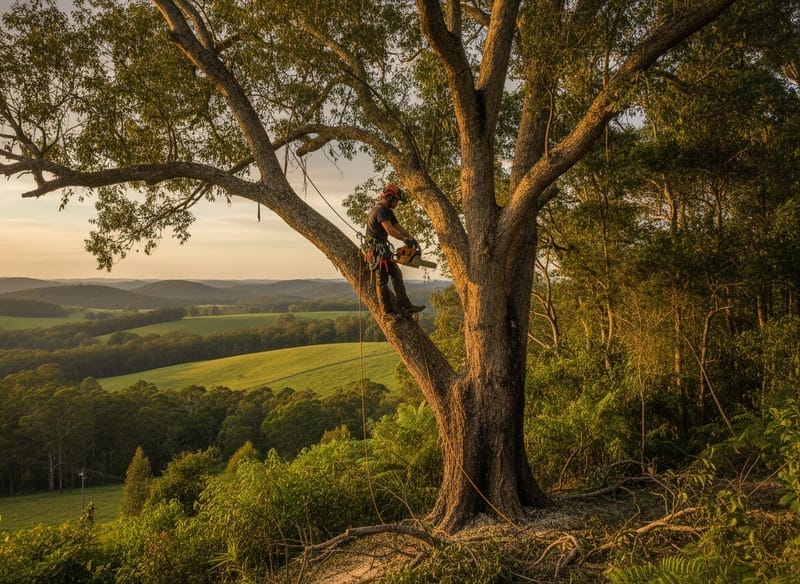
Our climbers carefully reduce the canopy to suitable growth nodes.
All foliage and branches are chipped and removed from your property.
Living on the acreage and bush-backed blocks of Duffys Forest means managing magnificent, towering canopies that define the character of our local area. But when heavy branches begin overhanging your roof, dropping excessive debris onto your driveways, or blocking vital winter sunlight from your garden, you need professional intervention. When residents search for professional Tree Lopping Duffys Forest, they are looking for a safe, reliable way to make their trees smaller and more manageable without destroying the natural aesthetic of their property.
As your dedicated local experts at The Forest Arborist, we understand that true tree management goes beyond simply hacking away branches. The sandstone plateau of The Forest requires an expert touch. Whether you are dealing with an imposing blackbutt (Eucalyptus pilularis) looming over your stable, or an unruly row of exotic cypress creating a dense boundary screen, our team brings the right equipment and expertise to handle the job safely.
We provide tailored canopy reduction and pruning strategies designed specifically for the Hawkesbury sandstone environment. Our climbers and ground crew are committed to delivering results that enhance your property's safety, clear vital sightlines, and maintain the long-term health and stability of your trees, ensuring they withstand the severe thunderstorms and downbursts that hit coastal Sydney from October to March.
In strict horticultural terms, "lopping" refers to indiscriminate heading cuts that leave large, blunt stubs instead of cutting back to an appropriate branch collar. Many property owners ask for tree lopping when they simply want a tree made smaller or need clearance around their homes. However, hiring unqualified operators to arbitrarily chop the tops off your trees can lead to disastrous financial and safety consequences for your property. Poorly executed topping cuts trigger a panic response in the tree, forcing it to push out rapid, weakly attached epicormic growth. In our storm-prone coastal Sydney climate, these weak, poorly anchored branches become major hazards during summer downbursts and saturating winter east coast lows. Furthermore, large open wounds from incorrect cuts invite decay, rot, and pest infestations that travel down the trunk, hollowing out the timber and eventually killing the tree outright. What was intended as a quick fix often results in thousands of dollars in emergency removal costs a few years later. Our solution is an approach governed entirely by the Australian Standard for Pruning of Amenity Trees (AS4373). Instead of harmful lopping, we perform strategic crown reduction, selective pruning, and precise canopy thinning. This achieves the exact goal you are looking for—a smaller, safer, and cleaner tree—while preserving its structural integrity, significantly reducing future maintenance costs, and keeping your property safe in all weather conditions.
When you request tree lopping, our AQF-qualified arborists assess your specific needs and apply the appropriate AS4373-compliant techniques to achieve your desired size reduction and structural clearance.
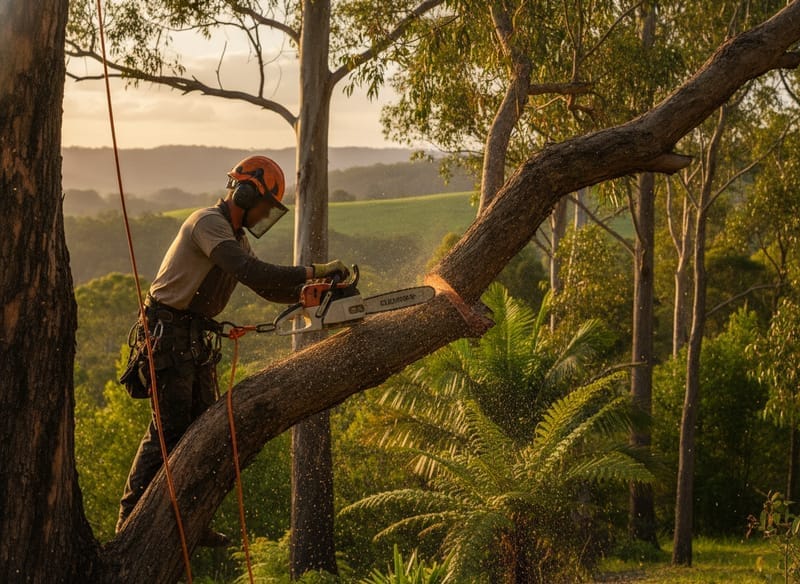
We reduce the height and spread of the canopy by cutting back to appropriate growth points or branch collars, retaining the tree's natural shape without leaving vulnerable stubs. This is the AS4373-compliant alternative to topping.
We carefully remove the lower branches of the canopy to increase ground clearance over driveways, footpaths, roofs, and horse paddocks, which is crucial for acreage access across Duffys Forest.
We selectively remove secondary branches throughout the canopy. This reduces wind resistance—protecting the tree against east coast lows—and allows more sunlight to filter through without altering the tree's overall size.
We target specific problematic limbs, such as those growing dangerously close to powerlines or rubbing against structural walls, removing them safely while preserving the health of the rest of the tree.
For large acreage boundary plantings and exotic windbreaks like cypress or camphor laurel, we provide heavy reduction and shaping to maintain a dense, manageable screen without compromising plant health.
Our process is designed to be seamless, safe, and entirely transparent from the first call to the final cleanup. We handle everything from the initial site risk assessment to dealing with heavy log removal.
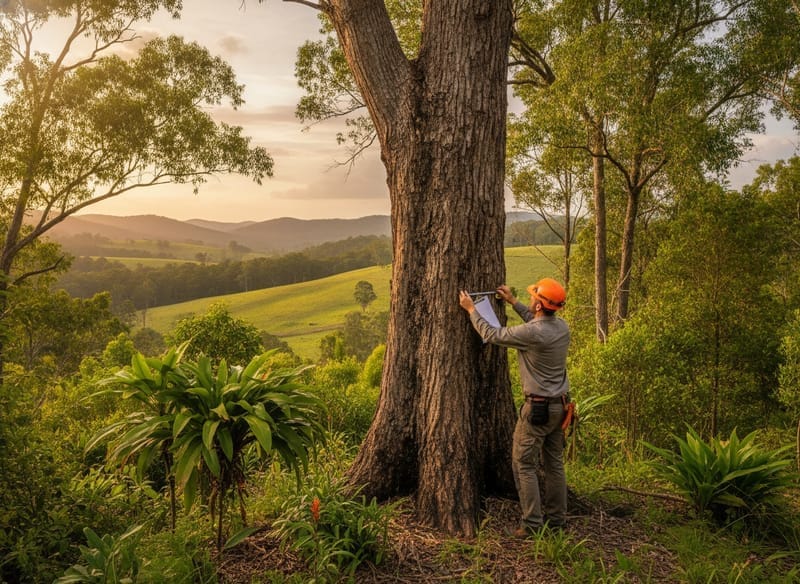
1. On-Site Assessment and Consultation We visit your Duffys Forest property to assess the tree's size, species, structural health, and location. We listen carefully to what you want to achieve—whether that is increased sunlight for your lawn, storm preparation ahead of summer, or critical roof clearance—and recommend the most effective AS4373-compliant pruning method.
2. Transparent Quoting and Council Checks We provide a detailed, itemised quote so there are no surprises. We will also advise if your requested Tree Lopping Duffys Forest project triggers the need for a Vegetation Clearing Permit under the Warringah Development Control Plan 2011, factoring in local overlays like the Duffys Forest Ecological Community and the NSW Biodiversity Values Map.
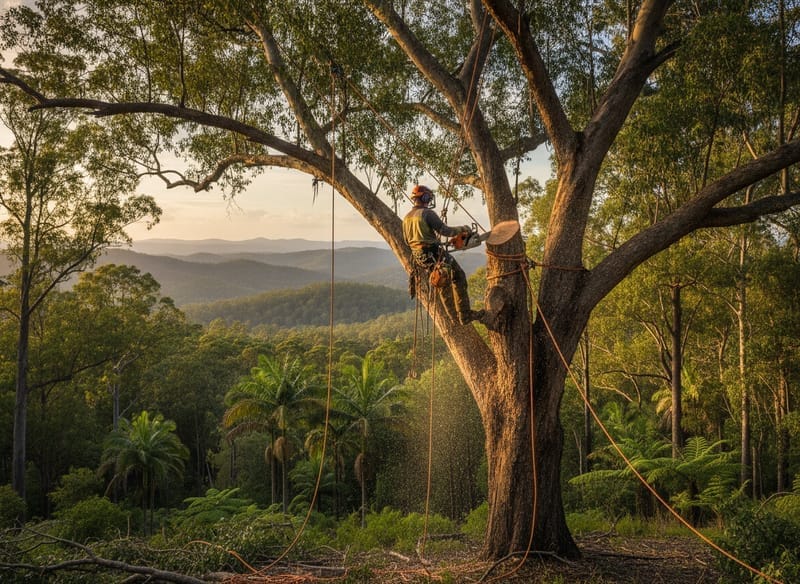
3. Safe Execution and Access On the day, our climbers and ground crew arrive with the necessary commercial-grade equipment. Whether utilizing advanced rope-access techniques for steep gully blocks where machinery cannot go, or deploying spider lifts on accessible acreage, we safely dismantle target branches piece by piece. We use lowering rigging to guide heavy timber carefully down, protecting your garden, fencing, and structures.
4. Comprehensive Site Cleanup We process all removed limbs through our high-capacity wood chippers. The site is meticulously raked, blown down, and cleared of all debris, leaving your property immaculate and providing you with quality mulch if requested.
We hold comprehensive public liability and WorkCover insurance for your total peace of mind. Our climbing arborists hold AQF Level 3 qualifications, ensuring all chainsaw operation, rigging, and high-angle rope work is executed safely and correctly. For complex sites requiring formal Northern Beaches Council permits, our AQF Level 5 consulting arborists can provide the necessary arborist reports. We strictly adhere to AS4373 pruning standards, ensuring our canopy reduction techniques promote tree health and safety across the steep terrain and bushfire-prone acreage blocks of The Forest.
Duffys Forest features a unique blend of sprawling horse properties, steep sandstone gullies, and native bushland backing straight onto Garigal National Park. Managing the canopy here requires highly specific local knowledge. Native giants like Sydney red gum (Angophora costata), turpentine (Syncarpia glomulifera), and blackbutt dominate the skyline. Reducing their size requires careful, species-specific pruning to avoid triggering dangerous epicormic regrowth or rapid canopy decline. Locals must also navigate the Northern Beaches Council's regulations, specifically the Warringah LEP and DCP 2011 (or the 2000 plan for certain deferred matters). Generally, pruning more than 10 per cent of a canopy in a 12-month period requires a formal Tree Removal and Pruning Permit. Additionally, because much of the suburb sits within mapped bushfire-prone land, clearing entitlements under the 10/50 Vegetation Clearing Code of Practice can drastically alter what is legally permissible. Our team understands these local overlays implicitly and ensures all Tree Lopping Duffys Forest work remains entirely compliant with council requirements, shielding you from heavy fines.
After we complete your tree lopping and canopy reduction, your trees will need a brief adjustment period. We recommend keeping the root zone well-watered during the hot and dry summer months to help the tree recover from the loss of foliage. Avoid fertilising, as this can encourage the rapid, weak regrowth we aim to prevent. Keep an eye on the tree over the following seasons. If you notice any unexpected deadwood, fungal brackets at the base, or signs of stress during the autumn and winter months, contact our team. For fast-growing species or boundary hedges, we typically recommend a maintenance inspection every two to three years to maintain optimal size and structural integrity.
The cost of height reduction depends on the tree size and the complexity of the cuts required.
Contact us for a free, no-obligation quote tailored to your property.
We provide canopy management across the local area.
Contact our experts for safe canopy reduction and pruning in Duffys Forest.
Get a Free Quote