Restore Order
Get your property looking pristine and functional again after a major storm.
Professional cleanup of fallen trees, snapped branches, and debris after severe weather.
Post-storm cleanup across Terrey Hills and The Forest.
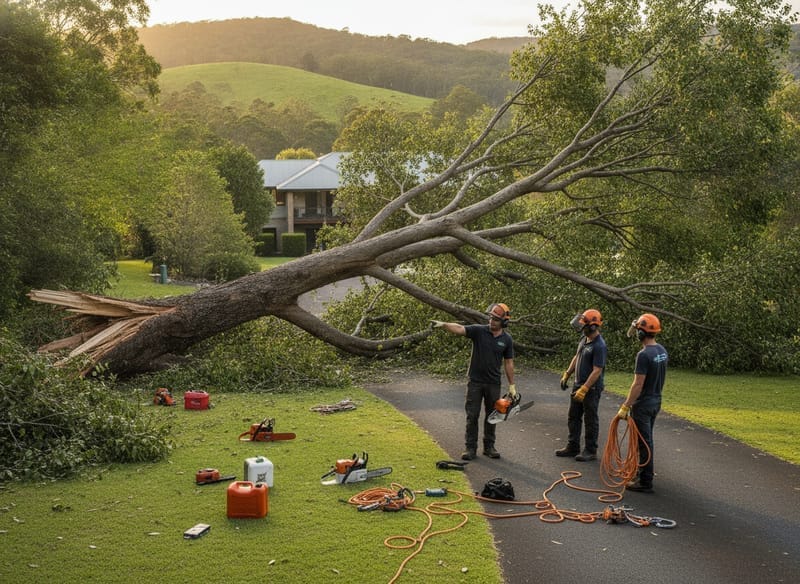
Our Storm Damage Tree Removal Terrey Hills service tackles the chaotic aftermath of severe weather.
Summer downbursts and thunderstorms often rip through the Terrey Hills plateau, tearing the canopies out of large eucalypts. We clean up the mess safely.
Get your property looking pristine and functional again after a major storm.
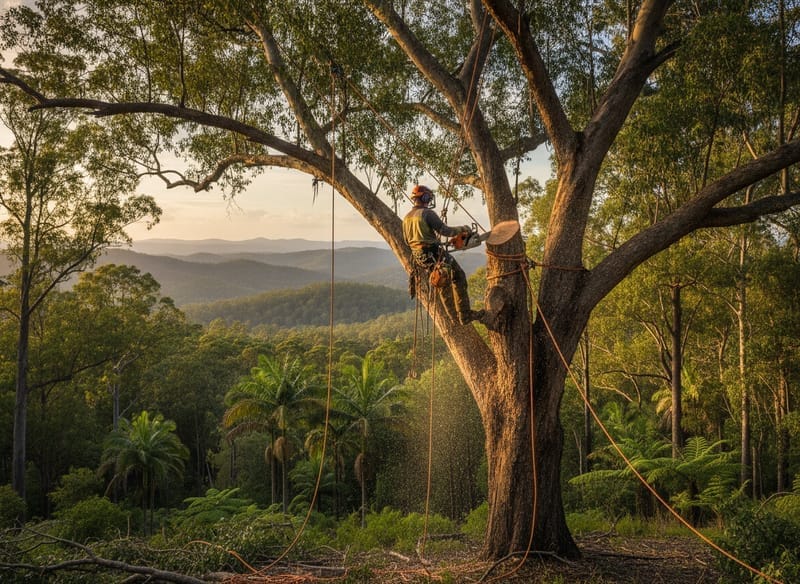
We identify and remove broken branches high in the canopy before they fall weeks later.
Get the right paperwork and itemized quotes to satisfy your insurer.
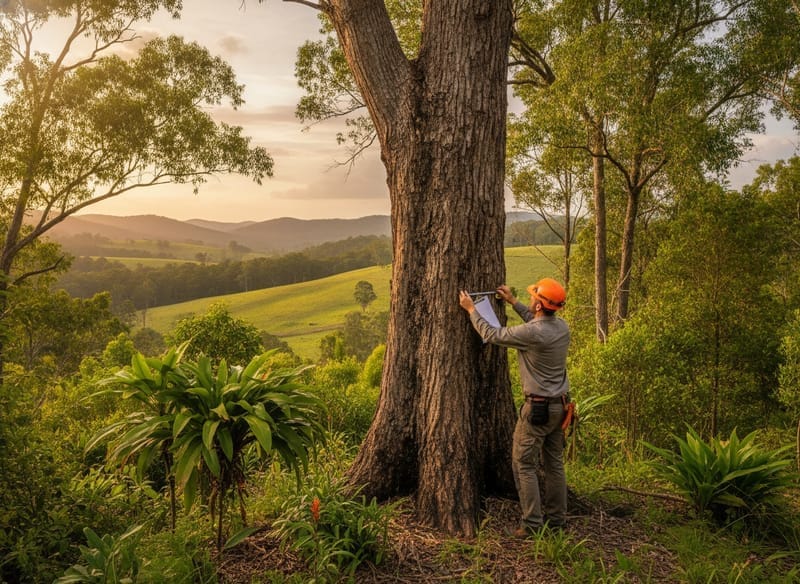
We inspect the storm damage and prioritize hazards.
We supply a fixed quote and any necessary photos for your insurance.
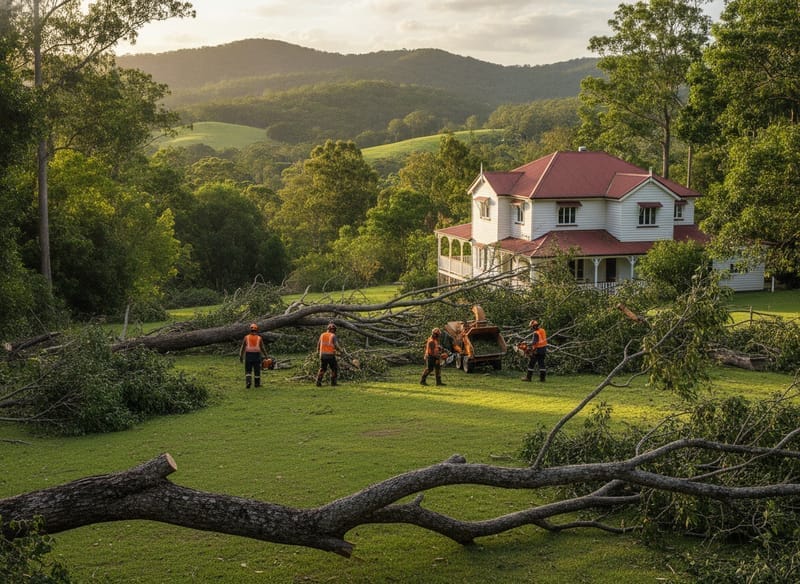
Our team cuts, chips, and removes all storm debris using safe rigging techniques.
We perform a visual check of surrounding trees for remaining storm damage.
When severe thunderstorms and east coast lows tear through our region, securing fast and professional Storm Damage Tree Removal Terrey Hills is critical to protecting your acreage or home. At The Forest Arborist, our local team is on standby to handle fallen, shattered, and hazardous trees across the Hawkesbury Sandstone plateau. Whether you have a massive blackbutt that has dropped a limb through your roof, or a shallow-rooted Sydney red gum leaning dangerously after a saturating deluge, we have the heavy equipment and local expertise to make it safe. The Forest is uniquely exposed to warm temperate coastal extremes, with high winds roaring up the gullies from Middle Harbour Creek and Manly Dam, putting immense pressure on our tall, mature canopies. We specialise in emergency triage, insurance-ready reporting, and safe, removals on steep blocks and battleaxe driveways. Our climbers and trucks are ready to respond to properties across Terrey Hills, Duffys Forest, Belrose, and Davidson, ensuring your family and assets are protected when the worst weather hits.
Storm-damaged trees are inherently unstable and unpredictable. Attempting to clear them yourself or hiring an under-qualified handyman is a fast track to serious injury or secondary property damage. In the aftermath of a storm, trees are often under extreme tension or compression. A single incorrect chainsaw cut on a hung-up branch or a partially fallen trunk can cause the timber to violently snap or roll. This risk is magnified on the steep gully blocks and large acreages of Terrey Hills and Duffys Forest. Large native species like Eucalypts and Angophoras frequently suffer twisting fractures or root-plate lifting due to our shallow soils over rock shelves. It takes an AQF Level 3 qualified climbing arborist to properly read the physical forces at play and dismantle the hazard safely. Furthermore, poor pruning of storm-damaged trees often leads to further decline. Simply lopping broken branches leaves large, ragged stubs that invite decay and promote weak epicormic regrowth. Our team strictly follows AS4373 (Pruning of Amenity Trees) standards, ensuring that any damaged limbs we can salvage are pruned back to the branch collar. When a tree cannot be saved, we conduct a safe, complete removal that eliminates the risk permanently.
Our approach to storm damage is systematic, prioritizing safety, property protection, and swift resolution. We deploy specialized arboriculture techniques tailored to the complex terrain and large timber found across The Forest.
Upon arrival, we walk the property to tag trees by priority. We isolate danger zones around immediate hazards like trees threatening power lines or structures, before assessing secondary hazards such as hung-up limbs and compromised standing trees.
Fallen or leaning trees store massive kinetic energy. Our AQF Level 3 climbers utilize advanced chainsaw techniques to safely release tension and compression in fractured limbs, preventing violent kickbacks or unpredictable rolling.
For massive blackbutts or turpentines that have failed over houses or narrow battleaxe driveways, we utilize crane lifts or double-rope climbing systems. This allows us to sectionally dismantle the tree and lower heavy timber smoothly to the ground.
Saturated soils and high winds frequently cause root-plate failures on our shallow Hawkesbury sandstone. We secure the uplifted root ball before cutting the trunk, ensuring the massive root plate doesn't violently snap back into the crater during the removal.
We provide detailed, itemised quotes and pre-work photo evidence formatted specifically for your insurer. Once approved, our heavy-duty chippers and tipper trucks rapidly process the debris, removing all logs and hazard material from your property.
When emergency strikes, you need a clear, professional pathway to getting your property safe again. From your first call to our team, we follow a strict process designed specifically for storm damage scenarios across Terrey Hills and surrounding suburbs. First, we conduct a rapid site triage. We dispatch an arborist to assess the immediate risks, cordoning off strike zones and determining exactly what is required to make the site safe. Second, we provide thorough insurance documentation. We take detailed photographs of the fallen or damaged trees, structural impacts, and access constraints, producing an itemised quote that breaks out each line item to streamline your insurance claim. Third, we execute the make-safe phase. Our climbers target the highest priority hazards, removing heavy timber resting on roofs, clearing blocked driveways, and cutting away hung-up branches that threaten to drop. Fourth, we proceed with the full removal and processing. Using top-handle climbing saws, EWP cherry pickers where access allows, and heavy ground saws, we dismantle the remaining compromised timber. Finally, we handle the clean-up. We run branches through our high-capacity wood chippers, load heavy logs into our tipper trucks, and rake the site clean, leaving your acreage or residential block completely safe and clear of debris.
Storm cleanup is one of the most hazardous operations in arboriculture. Our business is fully public liability insured and strictly compliant with WorkCover requirements, protecting you from any liability during the removal process.
Every cut we make is guided by AS4373 (Pruning of Amenity Trees), ensuring that surviving trees are pruned correctly rather than destructively lopped. If the storm damage occurs on a development site, we operate in accordance with AS4970 (Protection of Trees on Development Sites) to preserve the structural root zones of retained vegetation. All technical felling and climbing is performed by fully ticketed AQF Level 3 arborists holding current Working at Heights and Tree Felling qualifications.
Providing dependable Storm Damage Tree Removal Terrey Hills means understanding our local terrain and specific council regulations. Tree work here is heavily governed by the Warringah Development Control Plan 2011, specifically Clause E1 (Preservation of Trees or Bushland Vegetation), administered by Northern Beaches Council. Generally, you need a Vegetation Clearing Permit to remove any tree over 5 metres tall or to prune more than 10 per cent of its canopy. However, storm events often create exemptions. If a tree poses a high risk or imminent danger, it can be removed without standard consent provided an AQF Level 5 arborist confirms the danger in writing and a copy is supplied to the council. Many properties in Terrey Hills, Duffys Forest, and Belrose also sit in mapped bushfire entitlement areas where the 10/50 Vegetation Clearing Code of Practice applies. Additionally, common exempt exotics like camphor laurel and cocos palms can usually be removed rapidly post-storm. We handle this council compliance for you, ensuring legal, action.
After we complete a storm removal, it is vital to monitor the remaining trees on your property. Saturated soils and high winds can compromise trees that appear visually intact following an event. Over the following weeks, inspect the base of large eucalypts and angophoras for any signs of soil heaving or cracking, which indicates structural root zone failure. Check the canopy for hanging widow-makers that may have shaken loose days after the storm. If you notice split forks, sudden leaning, or excessive epicormic shoots, contact us. We can schedule a follow-up assessment and provide formative pruning to restore the balance and safety of your surviving trees.
Storm cleanup is quoted based on the volume of debris and the complexity of the hazards.
We offer fast, free quotes to help you get your cleanup underway quickly.
Servicing properties hit by storms across the region.
Contact our Terrey Hills team for safe, professional storm cleanup.
Request a Cleanup Quote