Restore Property Access
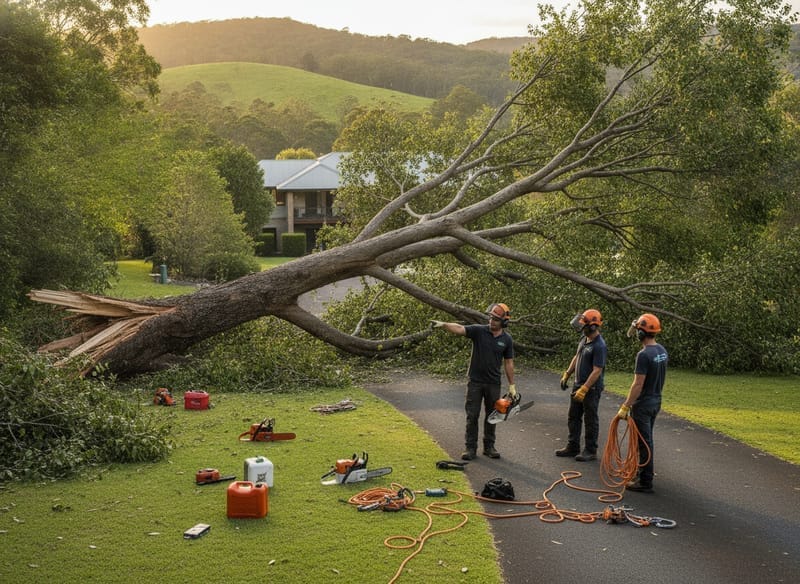
Quickly clear blocked driveways and paths so you can get back to normal life.
Complete post-storm cleanup and recovery for shattered canopies and fallen timber.
Providing storm damage recovery across Wheeler Heights and the Northern Beaches.
Our Storm Damage Tree Removal Wheeler Heights service focuses on the heavy cleanup after severe weather events.
Wheeler Heights is exposed to strong onshore winds and severe summer downbursts. We are highly experienced in cleaning up the resulting damage to large native gums and exotic plantings.
Quickly clear blocked driveways and paths so you can get back to normal life.
Removing fractured branches prevents them from falling weeks after the storm has passed.
Leave the heavy lifting, chainsaw work, and green waste disposal to fully insured professionals.
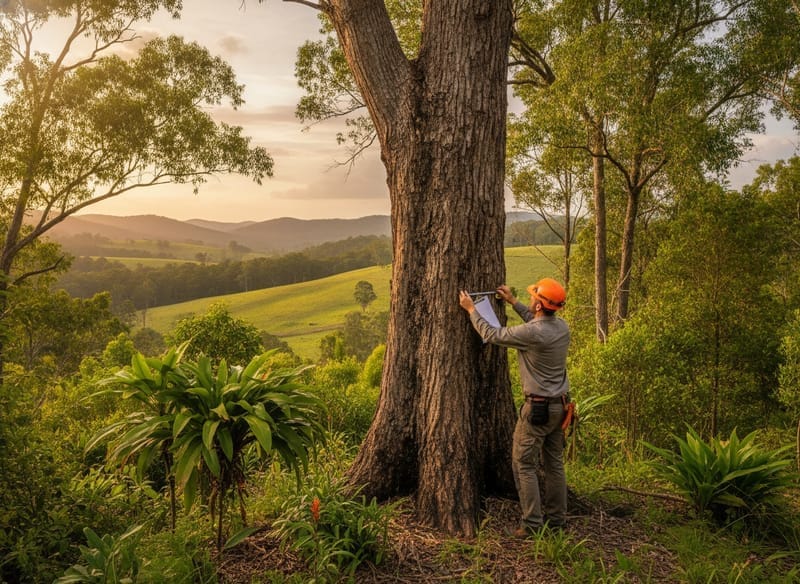
We evaluate the storm damage, prioritizing hazards like hung-up branches.
Our crew clears immediate obstructions from driveways, fences, and lawns.
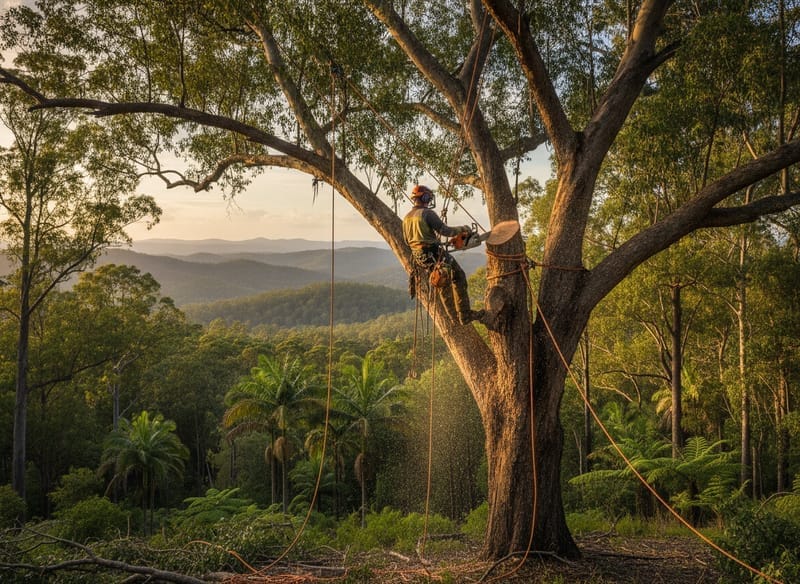
Climbers ascend damaged trees to make clean cuts on shattered limbs, aiding tree recovery.
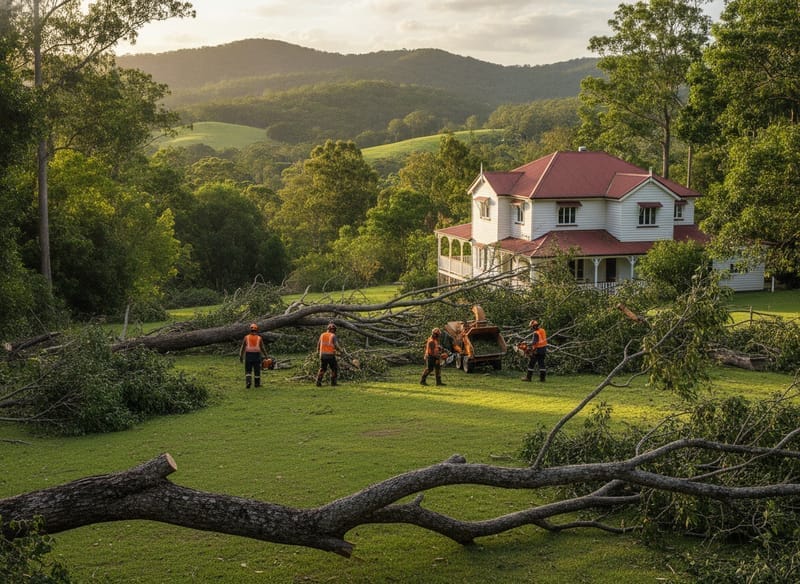
All fallen timber and branches are chipped and removed from your property.
When severe east coast lows and intense summer downbursts sweep across the Hawkesbury Sandstone plateau, they often leave a trail of destruction in their wake. If you are dealing with fallen branches, shattered canopies, or completely uprooted trees, prompt Storm Damage Tree Removal Wheeler Heights is critical to securing your property. We are The Forest Arborist, your local team of qualified climbing and consulting arborists dedicated to making your home safe after severe weather hits. Properties in Wheeler Heights often feature large, mature natives like blackbutts, Sydney red gums, and turpentines growing in shallow soils over rock shelves. When saturated soils combine with cyclonic winds, the risk of root-plate failure skyrockets. Our emergency team understands the urgency of these situations. We use specialised rigging and lowering techniques to safely dismantle hung-up limbs and fallen timber, ensuring no further damage occurs to your roof, fences, or vehicles.
Storm damage creates highly unpredictable timber. When a massive Sydney red gum or stringybark falls or splinters, the internal tension and compression forces within the wood become dangerously unstable. Attempting DIY cleanup with a backyard chainsaw is a major cause of injury, as branches can violently snap back, roll, or suddenly drop when a supporting limb is cut.
Furthermore, unqualified operators often rush in and apply destructive lopping techniques to standing trees that have suffered only minor damage. This ruins the tree's structure and violates the AS4373 pruning standard, leaving you with poorly balanced, weakened trees that are more likely to fail in the next storm.
Our qualified AQF Level 3 climbing arborists take a methodical, safety-first approach to complex storm damage cleanups. We know how to read the tension in a wind-thrown tree and safely dismantle it piece by piece. For standing trees that have lost limbs, we apply precise target pruning to branch collars to remove shattered wood, giving the tree the best chance to compartmentalise the wound and survive. We also document the damage meticulously, ensuring your insurance claims are supported by legitimate arborist assessments.
We employ advanced rigging, access, and dismantling techniques to safely remove wind-thrown trees and shattered canopies across difficult Wheeler Heights terrain.
Wind-blown timber stores immense kinetic energy. Our climbers and ground crew use specialised chainsaw cuts (like bore cuts and offset cuts) to safely release tension in fallen blackbutts and turpentines without the log rolling or the saw binding.
When a storm throws a tree against a home or hangs it up in a neighbouring canopy, we use friction devices, blocks, and heavy-duty rigging lines to lift and lower the hazardous timber piece by piece, preventing secondary impact damage.
For colossal root-plate failures or completely shattered canopies where safe climbing is impossible, we coordinate crane lifts. This is highly effective for tight battleaxe blocks and steep gullies, allowing us to lift massive sections of wood directly to our chipper trucks.
We assess partially failed canopies. Using rope-access techniques, our AQF Level 3 arborists navigate the remaining structure to isolate and safely remove widow-makers (broken branches suspended in the crown) while preserving as much live foliage as possible under AS4373 guidelines.
Uprooted trees leave massive root-plates exposed. Once the trunk is severed, these heavy root balls can violently snap back into the crater. We use mechanical bracing and controlled cuts to safely lower the root-plate back into the ground or process it for removal.
Navigating the aftermath of a severe storm can be overwhelming. We have developed a streamlined process to secure your property swiftly and safely. Step 1: Emergency Triage and Make-Safe Upon arrival at your Wheeler Heights property, our first priority is isolating immediate hazards. We identify trees threatening powerlines, homes, or access routes. We perform an emergency make-safe, which often involves rigging out hung-up limbs or tarping exposed areas once fallen timber is moved. Step 2: Assessment and Insurance Documentation Once the immediate danger is neutralised, we conduct a detailed assessment of the remaining damage. We take comprehensive pre-work photographs and provide an itemised quote. This detailed documentation is formatted to easily accompany your homeowner's insurance claim. Step 3: Strategic Dismantling and Removal Using rope-access techniques or EWPs where access permits, our climbers begin the systematic removal of the damaged trees. We process the fallen timber, using top-handle saws for canopy work and heavy ground saws for felling and cross-cutting the main trunks. Step 4: Debris Cleanup and Mulching All splintered wood, shattered branches, and foliage are run through our commercial chippers. We rake the site clean, leaving your yard safe and free of hazardous storm debris.
Making safe storm-damaged timber is high-risk work that demands strict compliance. We execute all removals and corrective pruning in alignment with AS4373 — Pruning of Amenity Trees and workplace safety regulations. If reconstruction is required, our consulting arborists can supply reports compliant with AS4970 — Protection of Trees on Development Sites.
Our business is fully insured with comprehensive public liability and WorkCover for all employees. Every crew is led by AQF Level 3 qualified climbing arborists holding current Working at Heights, EWP, and chainsaw tickets. When you hire us, you are protected by certified professionals using meticulously maintained rigging gear.
Dealing with storm damage in Wheeler Heights requires deep local knowledge. This area sits on a sandstone plateau bordered by steep gullies dropping toward the Manly Dam catchment. Many properties have narrow driveways or battleaxe access, making crane work or manual timber carries a necessity after a storm.
The dominant canopy consists of large native species like Sydney red gums, scribbly gums, and towering blackbutts. During intense east coast lows, the shallow soils over the sandstone shelf become fully saturated. Combined with heavy winds, this often leads to catastrophic root-plate failures, taking down entire trees.
Under the Northern Beaches Council (governed by the Warringah DCP 2011), high-risk or imminent danger trees can often be removed without a standard Vegetation Clearing Permit, provided an AQF Level 5 arborist confirms the danger in writing and council is notified. We manage this documentation, ensuring your emergency clearance complies with local council overlays and bushfire regulations.
After our team has cleared the storm damage, your remaining trees may still be recovering from severe wind stress. Keep a close eye on any standing trees that were heavily battered. Look out for lifting soil around the base, new cracks in the trunk, or sudden foliage die-off, as these are signs of delayed structural failure.
If we performed corrective pruning on damaged branches, monitor the cuts over the following months to ensure the tree is naturally sealing the wound. We recommend scheduling an annual inspection before the October-to-March storm season to proactively identify and mitigate any new canopy risks.
Storm cleanup is priced based on the volume of debris and the complexity of aerial work.
We provide clear, itemized quotes for complete storm damage restoration.
We assist with post-storm recovery across the local area.
Call our team for fast, thorough storm damage cleanup and tree recovery.
Book a Storm Cleanup